Saturday, 18 March 2023

Too much, too fast

Breaking bad


In many respects, we’ve lived through an unprecedented few years.


The enormous fiscal stimulus deployed around the world - combined with the brutal supply shocks - led to a burst of inflation as the world reopened.


Perhaps that was the inevitable cost of the shutdowns.


Too much, too fast


With the benefit of hindsight, many are saying that central banks should have started lifting interest rates sooner.


Maybe that’s so…with hindsight.


But it’s also questionable whether that would’ve made any meaningful difference to, say, timber shortages, or spiraling freight costs.


The monetary policy response to the spike in inflation has been rapid and brutal.


But now things are demonstrably breaking, with banks coming under severe pressure all over the place.


Wild swings


The volatility in bond markets over recent days has been almost beyond belief, which is not typically a sign of good news.


The US 2-year Treasury yield finished another wild trade at around 3.84 per cent overnight - it was above 5 per cent only a matter of days ago.


Australia’s yield curve is also now pointing to lower interest rates over the next few years.


More volatility is to be expected ahead, but the narrative around the need for lifting interest rates has been broken. 


Friday, 17 March 2023

Fixed rates to fall

Fixed rates to fall


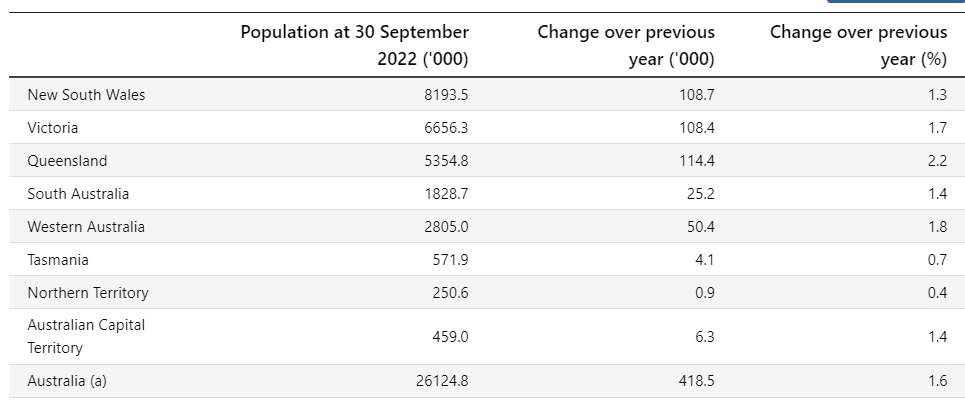
A snippet from yesterday's population release.


Net overseas migration hit a record high of +106,200 for the September 2022 quarter, the largest 3-month increase in modern history.


Westpac now sees the Reserve Bank holding interest rates in April to take stock of the situation to date.

Looking further out, with the sharp declines in the 3-year bond yield, lenders are already starting to cut their 3- and 4-year fixed rate mortgage offerings. 


There's so much competition between lenders for new business that it's imperative borrowers shop around for the best possible deal. 


Thursday, 16 March 2023

Population growth approaching record pace

Population count accelerates

Australia's population increased by +128,670 in the September 2022 quarter, implying an annual pace of around +500,000 per annum. 


Source: ABS

The population is growing faster than previously projected, and the population clock as of today was ratcheted higher to 26,385,000.

Indeed, this now implies population growth of faster than one person per minute, which is actually more like an annual population growth of +573,000 per annum.

I guess it will slow down a bit at some point.


The peak of the rush to south-east Queensland passed in the September quarter.

More and more employers are requiring workers back at their desks in Sydney and Melbourne, and with each passing week this trend will continue. 


Queensland topped the charts over the year to September 2022, with population growth of +114,400 or 2.2 per cent. 


Source: ABS

Sydney and Melbourne will take up the mantle of accounting for the bulk of population growth in 2023 as permanent migration increases. 

Record high immigration will take the pressure off the skills shortages this year. 

Jobs bounce as expected

Return to the office

We got the expected bounce in employment in February, with total employed persons rising +64,600 as Aussies returned from their long summer breaks. 

This solid increases came after two consecutive monthly declines, however. 

The 3-month average gain in employment was thus very modest at only +12k.

With population growth rates running now at record highs, we'll need to add around +30k jobs per month just to keep the unemployment rate on an even keel going forward (which won't happen now monetary policy is contractionary and confidence has been knocked lower). 


The unemployment rate ticked back down to 3.54 per cent, which isn't as low as we saw between July and November last year, but is still pretty darned low. 

New South Wales has the lowest unemployment rate around the traps at just 3.1 per cent.


Overall, this was a solid result which keeps the possibility of a further interest rate hike alive.

However, markets are now expecting interest rates to ease over the remainder of 2023, with a very fraught situation ongoing internationally and bank liquidity issues feared in the US and Europe. 


The labour force figures are expected to soften from here.

Wednesday, 15 March 2023

Long-term arrivals scaling new highs

Arrivals at record

Net arrivals bounced back strongly in January after the usual December lull.


And it looks like the net arrivals figure for February will be very large as the international students return en masse.


Student visa applications are tracking at record highs now.

Stripping out the temporary visa holders, long-term arrivals are running at record levels (Westpac chart).


Labour force rebound

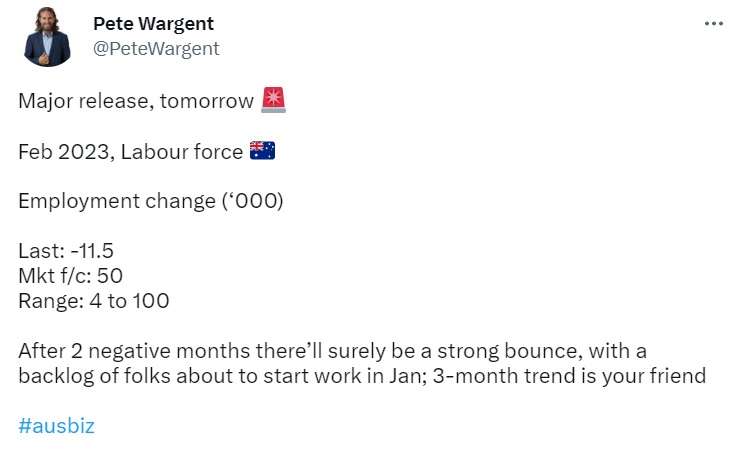
There's a very big news release out tomorrow, being the employment figures for February.


This one will be watched very closely, with a big rebound in jobs to be expected to be added after two declines, though the 3-month average will probably give a more accurate reading of the state of play.

SEEK's job ads index is now posting year-on-year declines, suggesting that the peak tightness in the labour market has now passed. 

---

I spoke at the PIPA Seminar this morning with Tim Lawless of CoreLogic, and the Chief Executive of the REIQ, Antonia Mercorella. 


The subject was Queensland's rental crisis, with tenants in SEQ now paying $1,800 per week for substandard properties...if they are lucky enough to even find a property to rent. 

Many are currently room-sharing or camping out. 

In the medium-term by around 2026, a surge from the build to rent sector will come into the equation.

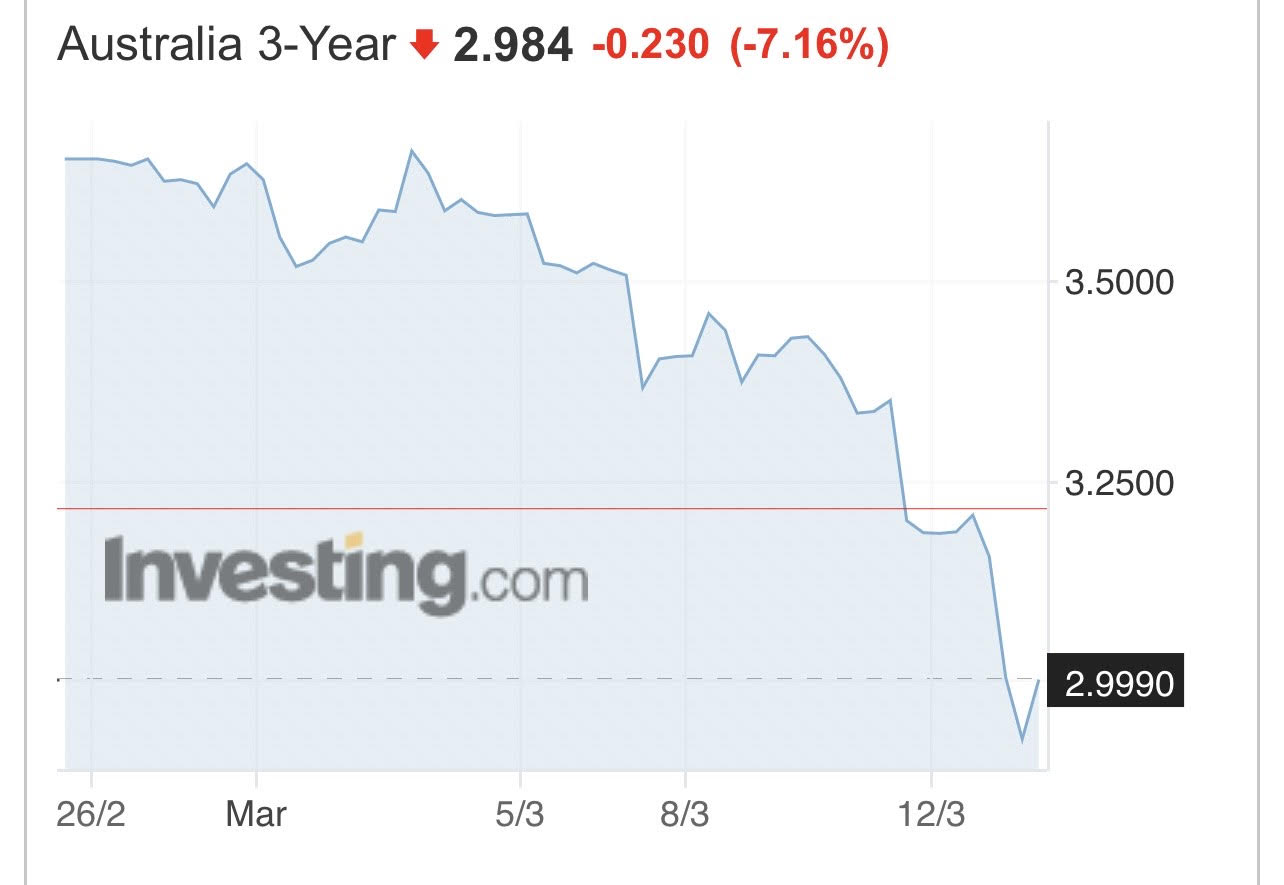
In the immediate term, with Australia's 1-year bond yield trading below 3.2 per cent - and the 3-year yield trading all the way down to 2.75 per cent overnight - surely it's time to release the extraordinary constraints on housing investor lending. 

Bond rally rocket

Inflation gradually easing


The US rate of inflation over the year slowed from 6.4 per cent to 6 per cent in February, and is now well on the way back down from the peak of 9.1 per cent in June 2022. 


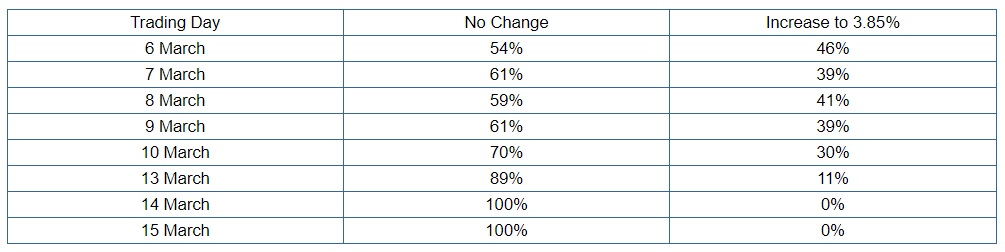
There have been some absolutely face-ripping moves in bonds over the past week, to the extent that markets think the rate hike cycle in Australia is now over and done with.


Indeed, markets have been intermittently toying with the idea of rate cuts over the coming months. 


Source: ASX


The driver for this has been the collapse of several banks in the US. 

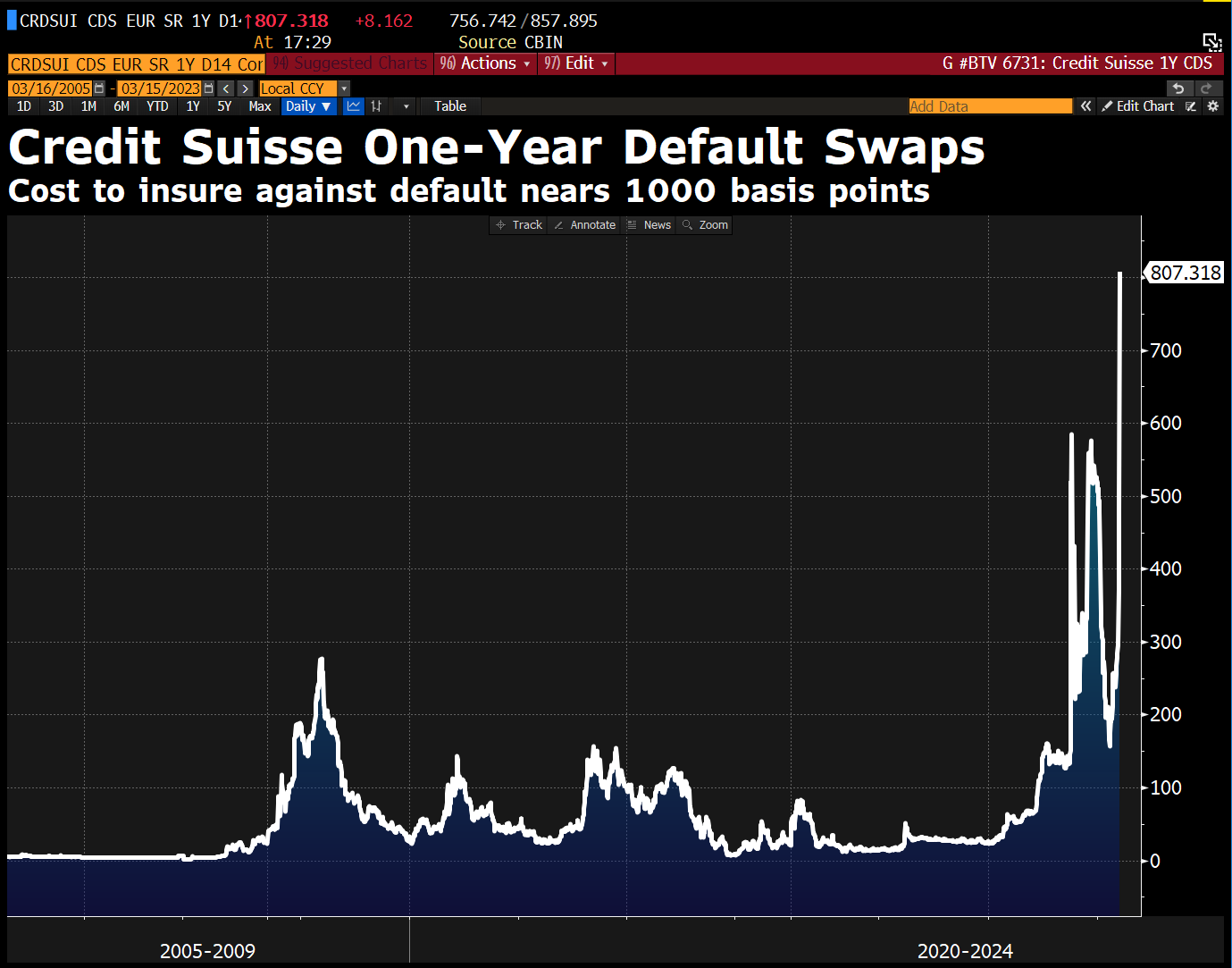
In Europe, Credit Suisse failed to file its Annual Report on time - every accountant's nightmare - and has uncovered a material weakness in its reporting.

It would be a tremendous understatement to say that this is not great timing, and the cost to insure against default has skyrocketed alarmingly towards 1,000 basis points.

Needless to say the bank's share price has crashed to a new all-time low, down another -25 per cent today, and well over -75 per cent over the past year alone. 


The European banks index is tanking this evening, while BNP Paribas was also halted after its share price crashed 10 per cent lower.

The market jitters continue. 

---

Australia's 3-year yield is trading way down at 2.8 per cent.

WTI Oil is below $70 for the first time since 2021 - which will at least be good news for inflation as demand drops away. 

Tuesday, 14 March 2023

Rental relief in the regions

City rentals tighten


SQM Research reported today an increase in rental vacancy rates in Darwin, Canberra, Hobart, as well as many regional locations, as the long tail of the dwelling construction pipeline delivered some welcome relief to tenants.


There were significant increases in rental vacancy rates in many parts of regional Australia: Gold Coast, Mornington Peninsula, and the Blue Mountains, for example.


On the other hand there were sharp declines to very tight levels in CBD vacancy rates for Sydney, Melbourne, and Brisbane, as international students rushed back to Australia. 


Overall, there is likely to be ongoing pressure in the rental markets of the larger capital cities as students return and as employers increasingly require employees to be back in the office. 


Indeed there was no respite for renters in the largest capitals, with asking rents for units rising nearly 9 per cent in Sydney and Melbourne over the past quarter, while Brisbane wasn't far behind. 


Source: SQM Research


Consumer sentiment surveys today reported sentiment mired at 30-year lows, while rising unemployment expectations underscored the growing need for a pause in interest rates. 


Indeed OIS pricing of 96.55 for July implies a strong likelihood (essentially a 2 in 3 chance) of a 25 basis points cut interest rates in Australia by July. 


In the US Federal Funds rate futures are also looking for interest rate cuts in the second half of 2023, in a remarkable about-face over the past week.


Back in Australia, the time to buy a major household item survey reading was the lowest since 1974, portending an imminent downturn for retailers in the discretionary segments. 


Unsurprisingly business confidence was shredded in the NAB Business Survey, dropping from a reading of +6 to a reading of -4 in a single month.


SQM Research's media release on vacancy rates can be found here


---


The ASX 200 is trading back down at 6,950, but still is only a few per cent down from a year ago.


Monday, 13 March 2023

Banks under pressure

Bank jitters continue

I've been on the road today down in Melbourne so no time to do blog posts.

Bonds have rallied very hard today, with European banks coming under pressure this evening.

Credit Suisse saw its share price dropping another 10 per cent to a new record low, trading below $2.20 - a far cry from the heady days of around $80 back in 2007.

It could be a lively trade overnight, with some regional US bank stocks getting crushed. 


Australia's 3-year bond yield is traded down as low as just 2.9 per cent before a small blunce; that's a huge change in thinking from 3.7 per cent only a few weeks ago. 


Labour force in focus

Thursday’s jobs data will be watched very closely by Aussie analysts.

Financial markets are now expecting there to be a pause in interest rate hikes, but a strong bounce-back in the jobs figures could yet result in another hike in April. 

Economists are expecting employment gains ranging from close to zero (seems unlikely) anywhere up to +100,000, so it's got potential to be a real 'Numberwang' data release. 

Last month the unemployment rate increased from 3.5 per cent to 3.7 per cent, but there may have been some unusual seasonal factors at play. 

---

Melbourne was great - it's so good to see the CBD absolutely pumping with life again after all the tribulations the city has been through. 

Don't think I have ever seen the city so busy at it was on Sunday (it was Labour Day weekend, bear in mind).