Thursday, 4 August 2022

Exports explode as Aussie enjoy European jaunts

Mining boom phase 3

A couple of interesting observations from the latest international trade data.

Firstly, the dollar value of Australia's gas exports ripped to a new record high in June, while coal exports have delivered a vast and unprecedented A$67 billion windfall over the year to date. 


Exports exploded to a record high of $61½ billion in June, and almost A$600 billion over the financial year. 

This is the 3rd phase of Australia's resources boom: the exports super-boom.


And the trade surplus surged to a record high, turning almost vertically to $17.7 billion in the month. 


The value of exports is massively outpacing sluggish imports. 

Aussies travel overseas

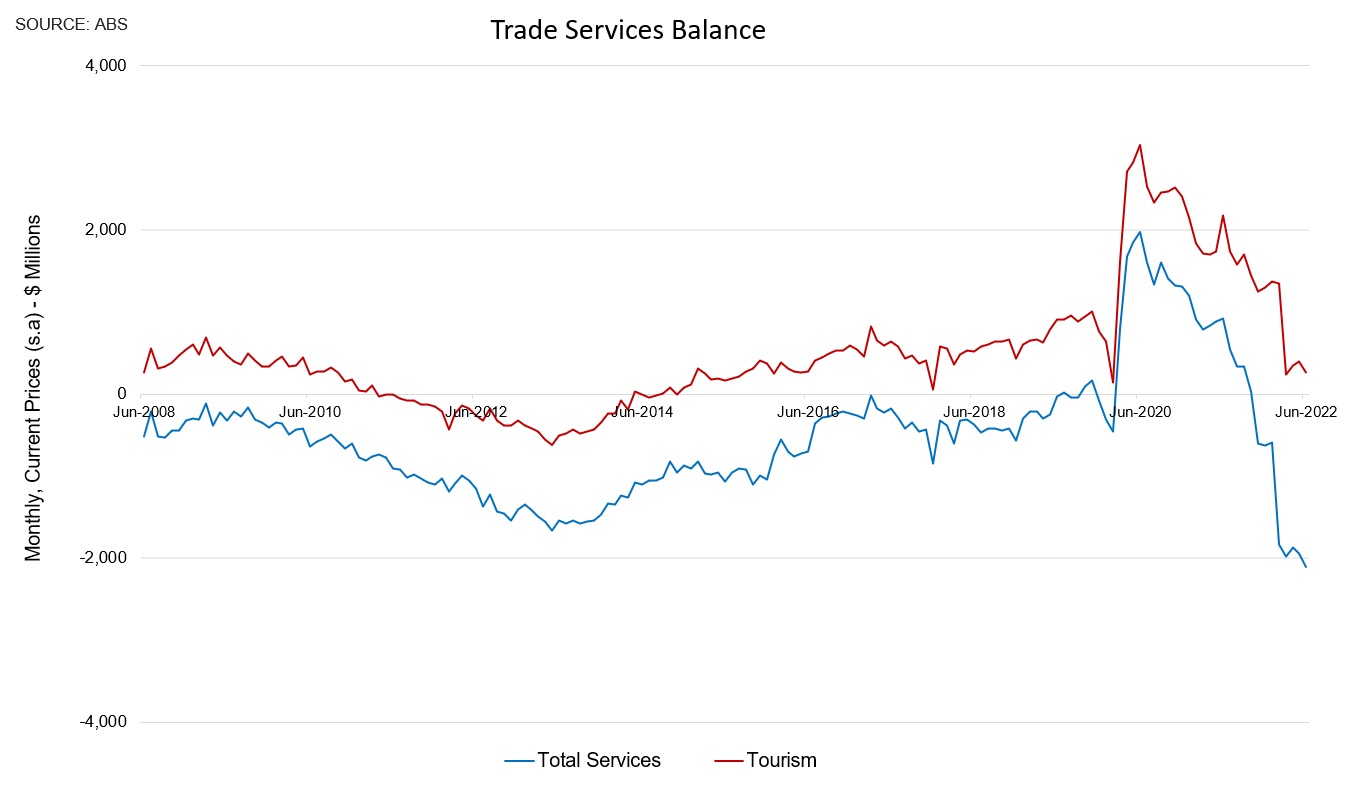
There's been a huge surge in outbound travel over recent months, with tens of thousands of Aussies gallivanting currently around Europe.

This is reflected in a trade services deficit. 

Most of these Aussies will be back Down Under for the busy summer, though, I expect.

Meanwhile, the government is simultaneously focussing on reducing the massive backlog of visa applications, including a record high 42,700 students visa applications received in the past month alone. 

In a few months time Australia will probably start to feel rather congested as everything opens up but struggles to cope with the surge in arrivals. 

Crude oil futures down another 4pc

Oil futures slide

A key inflation theme for the next 6 to 9 months is that things will get worse before they get better...but they will get better. 

Crude oil future settled at around $90.60 today, down another 4 per cent, and at the lowest level since February. 


Stockpiles have surged unexpectedly after OPEC+ said it would raise its oil output target by 100,000 barrels per day. 

The recent trends in commodity prices are worth remembering when everyone warns of 'skyrocketing' inflation over the next few months.

Prices are still up over the year, but crude futures have fallen by more than a quarter since March. 

Capital city population grew 2.5m over the past decade

Between the Censuses

Some interesting stats from the past decade, with Australia's capital city population increasing by 2½ million.

Melbourne experienced the greatest increase in its population, at 806,700.


Sydney grew by 650,800, and Brisbane by 421,500.


Source: ABS

Regional Australia grew by 832,000 over the past decade, with key growth hubs including the Gold Coast and Geelong.

Wednesday, 3 August 2022

Wage price spiral?

Wages data still weak

One of the interesting pieces of information to watch in a fortnight's time will be the wage price index figures.

The anecdotal evidence seems to be quite varied, with some in-demand roles seeing tasty pay rises, but many employed positions going backwards in real terms.

Most likely the June figures will show wage price rising by less than 3 per cent over the 2022 financial year. 


The March 2022 figures again missed to the low side, and resulted in an annual increase of only 2.35 per cent, with public sector wage price increased stuck at only 2.2 per cent. 


The annual figure will have to be higher for the June quarter, but the question is by how much?

The early signs aren't great.

CBA's wage rate indicator estimates that even by the end of July annual wages growth was stuck at around 2½ per cent. 


Source: CBA

NAB also estimates for the June quarter an increase of 2½ per cent. 

If this comes to pass, such a pathetically weak result would be a strong argument for a pause in rate hikes after next month, especially given the significant declines in commodity prices since May. 

A real wage price increase - after inflation - of around minus 3½ per cent seems more akin to a black hole than a wage price spiral. 

It's possible, of course, that after a lag stronger wage increases will come later. 

Tuesday, 2 August 2022

Building approvals easing

Approvals in decline

Private sector house approvals were 22 per cent lower than a year earlier in June, at 9,834, with all cities reverting lower. 


Attached dwellings were also 10 per cent lower over the year at 6,165, the ongoing decline now being driven by fewer Sydney apartment projects being passed for approval.

I expect many projects will be scrapped or mothballed anyway due to higher construction costs and rising interest rates. 


Over the financial year there will still just over 200,000 dwelling approvals, with a record number of dwellings under construction at the last count, so the pipeline should remain strong for some time to come. 


Rate hikes update

The RBA lifted the cash rate target as most market analysts expected by 50 basis points to 1.85 per cent today.

The language appeared to hint at a data-dependent path going forward.

At the time of writing, Australia's 3-year bond yield has shed more than 100 basis points from the June highs, to sit at 2.685 per cent.


The 10-year bond yield was even trading at a smidgen under 3 per cent, with inflation expectations experiencing something of a welcome decline in this week's data dump. 

Monday, 1 August 2022

Rosie Yeo: This is how to create a powerful property strategy

Property Pod

How to create a powerful strategy, with someone who's in expert in doing exactly that...Rosie Yeo.

Tune in here (or click on the image below):


You can also tune in at Apple Podcasts, Spotify, etc. 

And also, at YouTube here:

Jobs market passing the peak

Jobs ads decclining

Still plenty of hiring to be done, but looking further ahead, job advertisements are now on the way back down.

ANZ's monthly data series:


ANZ still expects the unemployment rate to fall to below 3 per cent by early 2023. 

Fuel prices at 2-month lows

Fuel prices dropping

Governor Lowe highlighted in a speech a month ago how inflation will eventually fall back to target.

One example he highlighted was fuel prices having soared 37 per cent over the year to June, adding a full percentage point to inflation. 

Lowe pointed out that even if oil prices stay high, the annual rate of inflation for oil will eventually fall from 66 per cent to 0 per cent. 

Some related good news this week, with the average cost of unleaded fuel in Brissie pulling back to $1.64/litre.

It wasn't so long ago we were forking out $2.30 in Noosa, so this is some improvement! 


The 6-month fuel excise cut is due to expire at the end of September, so Albanese and Chalmers could do a lot worse than rolling it over if they're serious about tackling living costs (I guess they won't though). 

Internationally, there's a similar dynamic at play for freight costs, which are still 4x the level they were at pre-pandemic, but have now been falling for 10 weeks on the bounce.

Over the past 20 weeks the freight index has fallen by 45 per cent. 


The price of semi-conductors are also well off their recent highs, which should help to kick-start car production.  

Some of the supply-side problems in the global economy related to the pandemic are now being resolved. 

The balancing act for Governor Lowe over the coming months will be to tighten monetary policy to bring supply and demand back into balance, and reduce inflationary pressures, without going so far as to tip households dealing with higher living costs into financial distress. 

Markets are looking for a 50 basis points hike this week (to a cash rate target of 1.85 per cent), and there will almost certainly be another hike beyond that, before any potential pause. 

---

CoreLogic will release the July housing index figures today, with significant drops for Sydney (-2.2 per cent), Melbourne (-1.5 per cent), Brisbane (-0.8 per cent), and regional Australia (-0.8 per cent).


Property investors have been somewhat compensated, with rents up a further 0.9 per centin July, and up 10 per cent over the year. 

The housing finance approvals figures are due out on Tuesday, and should also show a sharp reversal from May's gains.