Friday, 29 April 2022

Housing credit impulse fades some more

Credit growth eases

Credit growth in the Aussie economy slowed to 0.4 per cent in March, the slowest monthly growth in nearly a year, despite solid results for business and housing credit. 
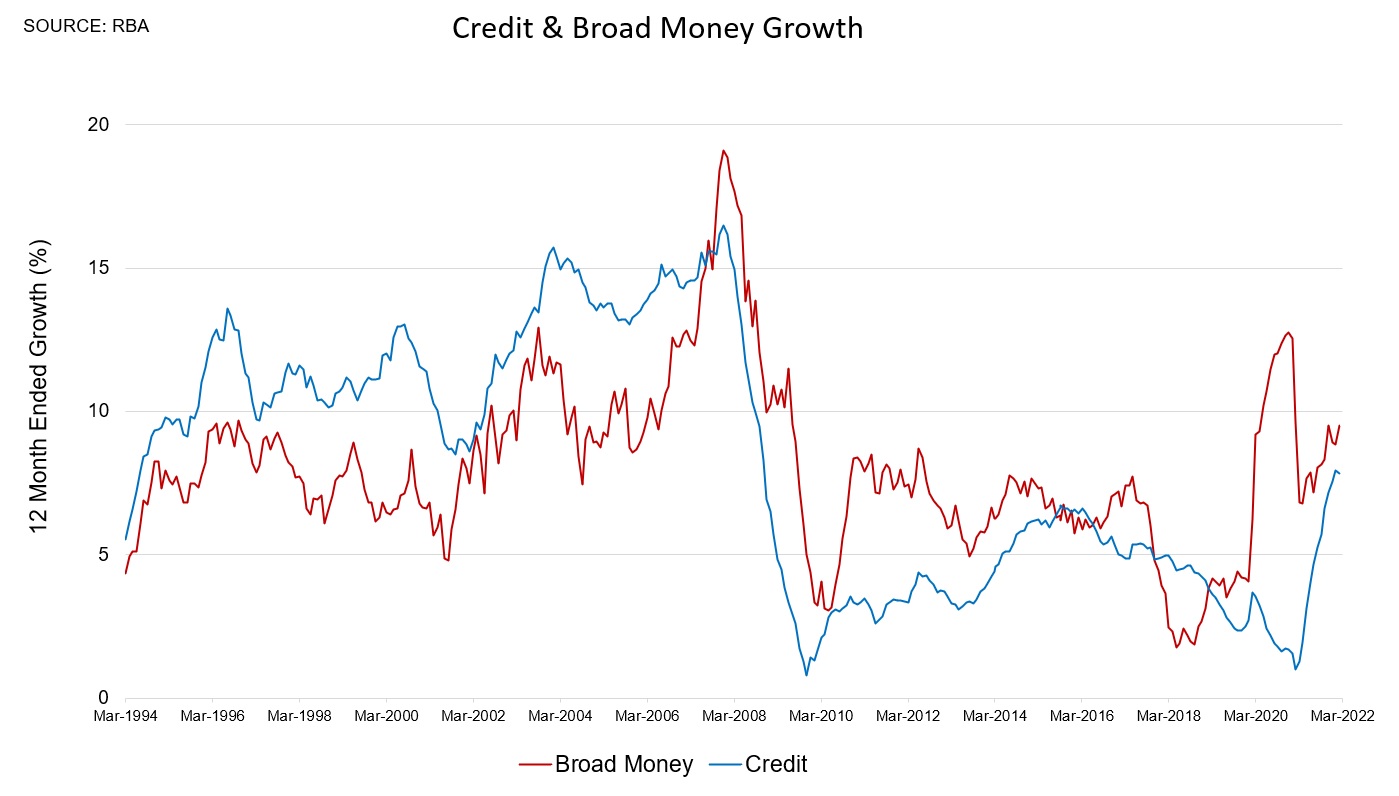

Owner-occupier credit growth is now slowing, and is being replaced by investors seeking an inflation hedge. 

With the real cash rate deeply (!) in negative territory, investors will be looking for markets in which to deploy their excess savings, especially given the chronic shortage of rental properties leading to surging rents. 


Despite the return of investors, overall housing credit growth looks to be peaking out. 


And indeed the housing credit impulse shows that the peak of annual price growth has already long since passed for this cycle, with steadier results to be expected over the period ahead. 


Construction costs soar

In other news, the producer price index figures followed a similar trajectory to consumer prices, rising by 4.9 per cent over the year. 

As earlier implied by the ABS, there were some major increases in materials costs. 


Input construction costs for houses were up by more than 15 per cent over the year (17 per cent in Melbourne), driven by sharp increases in the price of timber and other metals. 


Output costs across all construction sectors increased at a double-digit pace for the first time since the data series began in 1996.

I recently discussed this dynamic with some developers at an event in Queensland.

Their view was that supply chains may well right themselves in time, but typically prices tend to be sticky and construction costs are unlikely to come back down by much, if at all. 

If they prove to be correct, this suggests further developer insolvencies ahead - and an undersupply of dwellings - with the cost of building a new home gapping irreversibly higher. 

Thursday, 28 April 2022

Lucky Country

Export boom

Inflation is biting a bit, but take a look at Australia's export prices, up 47 per cent over the past year. 

Import prices were up 19 per cent, driven the sharp lift in by petroleum. 


Gas export prices were up 146 per cent over the year, and coal export prices were up by an unbelievable 243 per cent. 


Strewth.

Wednesday, 27 April 2022

Inflation lifts at last

And...inflation

Headline inflation jumped 2.1 per cent in the March quarter, taking the annual increase to 5.1 per cent.

Dwelling construction costs were up, and fuel prices were up a lot (+11 per cent). 

Construction costs saw the biggest jump since the introduction of the GST, due to a combination of a shortage of materials, ongoing elevated demand, and a reduction in government construction grants. 

The underlying inflation measures increased by 1 per cent (weighted median) and 1.4 per cent (trimmed mean) respectively, taking the analytical measures to above the target band for the first time in many a year. 


It's easy to forget that headline consumer prices initially fell during the Q2 2020 shutdown, but that seems like quite a while ago now. 

In any event, partly as a result of recent supply chain disruptions and warfare in Ukraine, as well as the successful fiscal stimulus, we now have some price inflation!


Fuel prices should hopefully revert a little lower next quarter, but there is an increasing clamour for the Reserve Bank to lift interest rates either in June, or even by a token 15 basis points as soon as next week. 

I'm blogging a bit on the hoof here at Sydney Airport - and there are more detailed thoughts to be considered here in terms of the potential impacts of all this - but in the meantime you can get the detailed rundown as always from James Foster here

Tuesday, 26 April 2022

Kent Lardner: How to pick outperforming suburbs

Property pod

This week on the pod, Kent Lardner from Suburb Trends explains how we analyses the housing market at the suburb level, and the key trends he has found.

Tune in here (or click on the image below):

You can also tune in at Apple podcasts, or Spotify, or elsewhere. 

And you can listen at Youtube here

Monday, 25 April 2022

Oil price now disinflationary

Inflation the highlight

There will be a lot of excitement about inflation readings over the week ahead.

As recently as October (!) there were ongoing calls to lower Australia's inflation target to 1 to 3 per cent, as policymakers have continually under shot the 2 to 3 per cent target range since 2014. 

Core inflation is expected to come in at around 1 per cent for the March quarter, which could take the year-on-year reading to around 3.2 per cent, or possibly even a notch higher.  

The energy sector has been a very happy hunting ground for value investors since early 2020, but the sliding oil price at today's levels is now disinflationary (i.e. slowing the pace of price inflation).  


Now, sure, if the oil price was to rally towards $150, then that could contribute to a renewed inflationary pulse. 

The iron ore price is also now crapping the bed, down 10 per cent today - while coal is down 5 per cent - with a huge portion of the Chinese population trapped in lockdown.

Australia's wage price index rose by only 2.3 per cent in 2021 - and the next wages release isn't until May 18 - perhaps accounting for most analysts believing that the Reserve Bank will sit pat until June, before deciding whether to deliver an interest rate hike. 

Friday, 22 April 2022

Wednesday, 20 April 2022

Cities exploding back to life

City revival

I took this photo of Elizabeth Street in Sydney - during working hours! - on Monday January 17.


Fast forward to today, 3 months on, and thankfully the city is roaring back to life. 

Pitt Street Mall this afternoon, absolutely chockers. 

Great to see. 

Rental trends

Rental vacancies ran extraordinarily high in some Sydney inner-city markets, but have normalised quite quickly this year. 

This is Pyrmont, for example (charts via SQM Research):


Source: SQM Research

The weekly rental listings figures suggest that national rental vacancies have continued to decline from 16-year lows through April month to date.

This is Erskineville, in Sydney's inner west. 

I've been to Melbourne over the past few weeks, and although Docklands was still showing some signs of tumbleweeds and empty cafes, the Melbourne CBD itself is by and large back to its former hustle and bustle, a few boarded up shops notwithstanding.

Even the Docklands rental vacancies appear to have normalised, in any case. 

South-east Queensland has benefited from the highest interstate migration on record, and indeed even inner-city suburbs are now experiencing tight rental markets.

New Farm and Teneriffe, by way of a prime example:

And this is before international students and tourism numbers get back to hitting their straps.

Interestingly on parts of the Sunshine Coast we're just starting to see the first signs of an increase in rental vacancies, possibly representing a nascent tenant pushback against the surge in asking rents (although the main strip of the Gold Coast remains extremely tight). 

Reports of the death of the Central Business District have been somewhat exaggerated...

Tuesday, 19 April 2022

Property Pod: Property investors going bush

Property Pod

This week on the Property Pod, Bushy Martin talks regional property investment trends.

Tune in here (or click on the image below):


You can also tune in at Apple podcasts, Spotify, and so on.

And indeed, Youtube here: